

A Fully Automatic Broiler Chicken Cage improves farm efficiency by automating the repetitive jobs that consume labor and cause uneven results. Feeding, drinking, and manure removal run on set schedules, so every bird receives the same care at the same time. Vertical H-type tiers add bird capacity to the same house footprint, while steady airflow and frequent manure removal support consistent growth. Huabang Smart reports a 70% labor cost reduction, a feed conversion ratio (FCR) gain of 0.1–0.2 points, and mortality under 3% for its system. This guide shows how those gains happen and how to verify them on your farm.
I wrote this guide for farm owners, purchasing managers, engineers, contractors, and distributors who compare poultry equipment for new builds or expansions. Labor shortages, rising operating costs, and stricter productivity targets push commercial broiler farms toward automation. The sections below follow the questions buyers ask most often.
What Is a Fully Automatic Broiler Chicken Cage System?
Core Components of the System
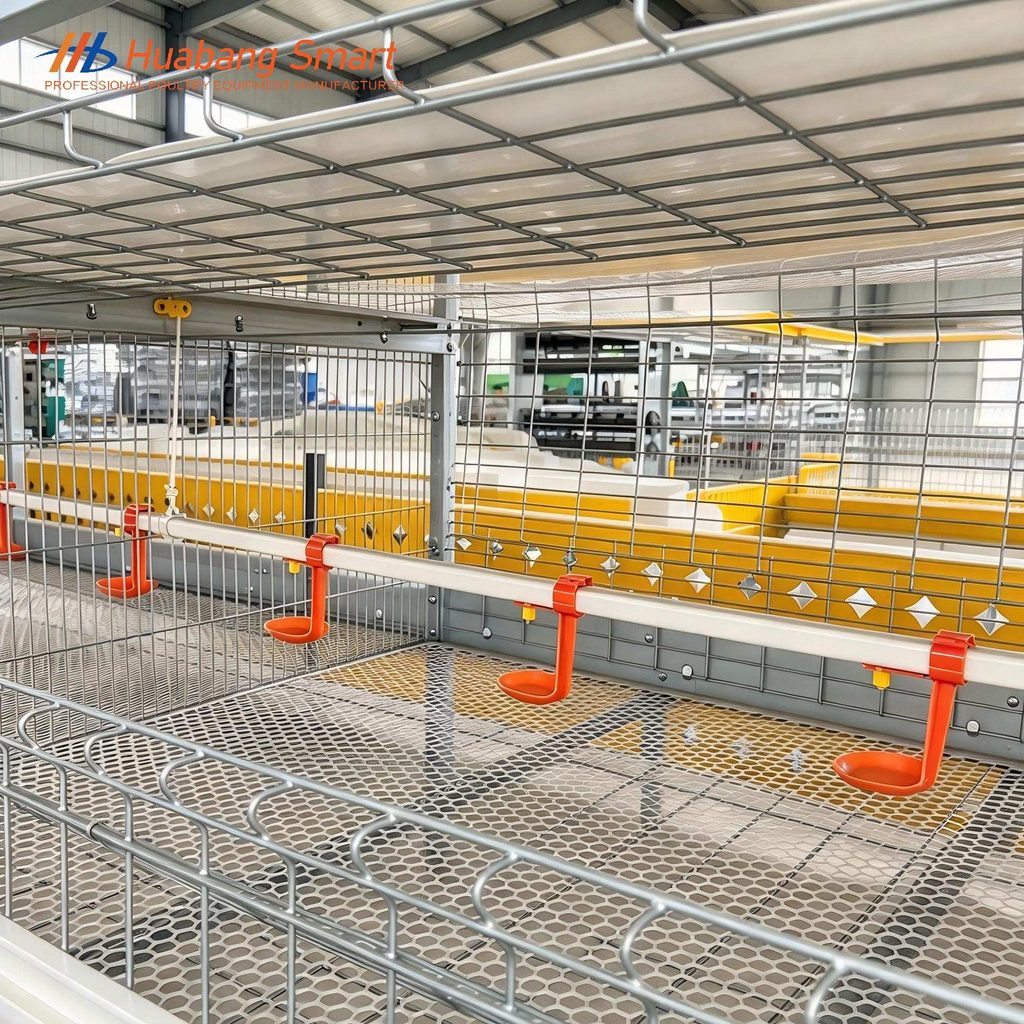
The Fully Automatic Broiler Chicken Cage system is a type of vertical housing system for meat-producing chickens. Huabang Smart makes it. It’s an H-shaped unit with 3 to 8 levels. There are 1250 mm of length, 1000 mm of width, and 450 mm of height in each cage unit. You can also get them in 480 mm or 500 mm heights if you need to. Hot-dip galvanized Q235 steel that weighs 275 g/m² is used to make the frame, the panels, and the wire mesh. The mesh on the bottom has a layer of plastic on it that keeps the breasts from getting blisters. Nipple drinkers that can be turned 360° are there, as well as a high-tenacity PP waste belt that goes around the body of the cage. The setup is complete with temperature control gear.
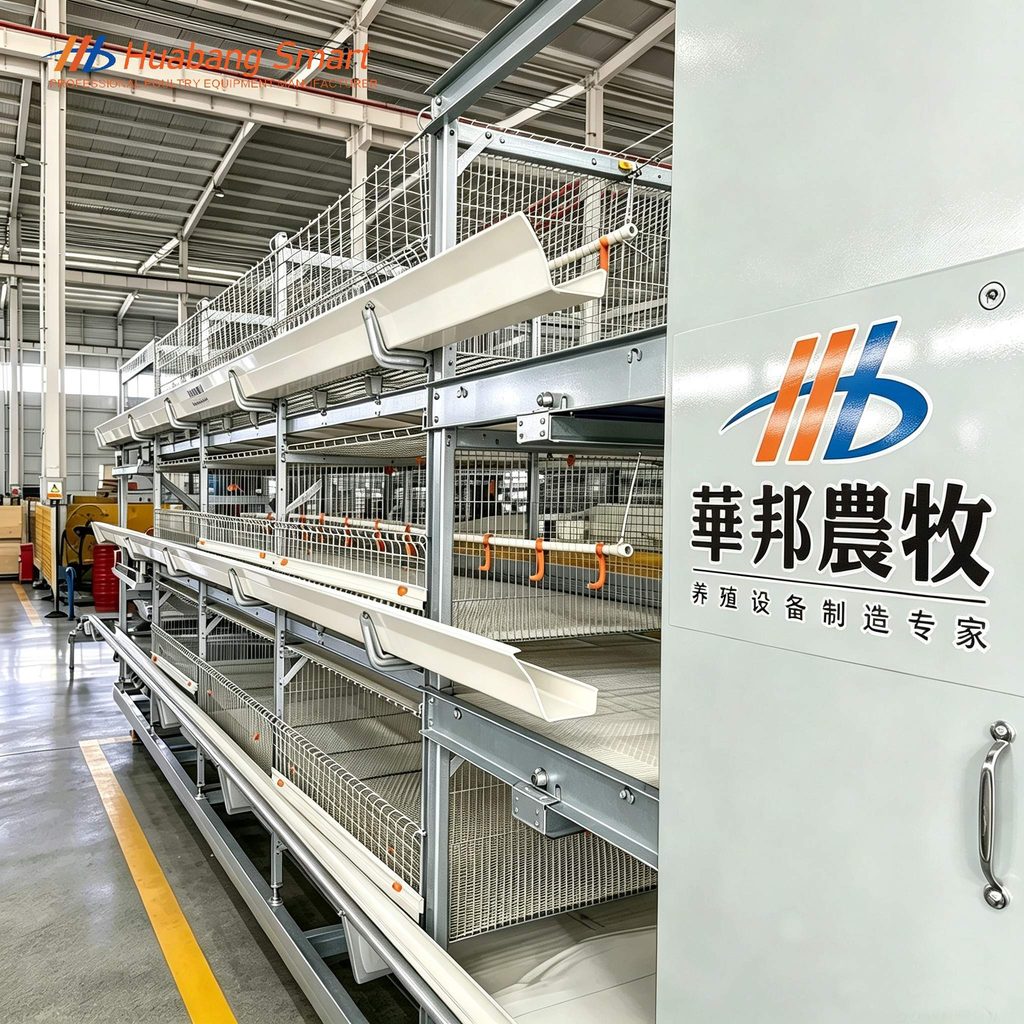
Cage Unit, Cage Line, or Turnkey Project
People often mix up three different price groups. A cage unit is made up of the frame and the mesh. Along each row of cages is an area for feeding, drinking, and getting rid of waste. People who buy a full project get help after the sale, help planning the site, help designing the system, a detailed setup list, video installation tips, and installation on-site. It is best for big farms and EPC companies to use the turnkey plan because it lets one party handle both fit and performance. Consumers and sellers with less money might want to start with a sample unit. You can buy examples from Huabang Smart to see how the design works. The samples come with installation and chicken-raising directions, so you can place a bigger order.
Compatibility Factors That Shape the Design
Because every house has limits, the first step in planning is to learn about the place. The number of rows and aisles it can hold is based on how long and wide it is. It’s hard to add more steps because the ceiling is so high. Based on how useful it is, the house can run certain motors, fans, and buttons. The weather impacts the kinds of insulation and cooling that can be used, and the electrical standards impact the needs for motors and controls. In the US, check that the power is 60 Hz and look at the building codes for your state and town. You should also check the housing needs of your integrator, as many U.S. grower contracts spell them out. Engineers can send Huabang Smart house ideas and get a layout that works with the existing infrastructure. What is the best time to use automation? When the daily jobs that need to be done by hand change.
Which Farm Efficiency Bottlenecks Does Automation Solve?
Labor and Feeding Consistency
The amount of work that gets done depends on how many people show up and how carefully they all do their jobs. The birds on the fifth level have to wait to eat, but the birds on the first level can eat whenever they’re ready. One or more chain or auger feeders make sure that every row gets food at the right time. Nipple drinkers let animals get water whenever they need it. With this routine, Huabang Smart says that 70% less work needs to be done. With less repeated work, feedings will also be missed less often. Staff time is now used for changes, inspections, and health checks so that one boss can keep an eye on more birds. Being trained is still important, but their work is now worth more.
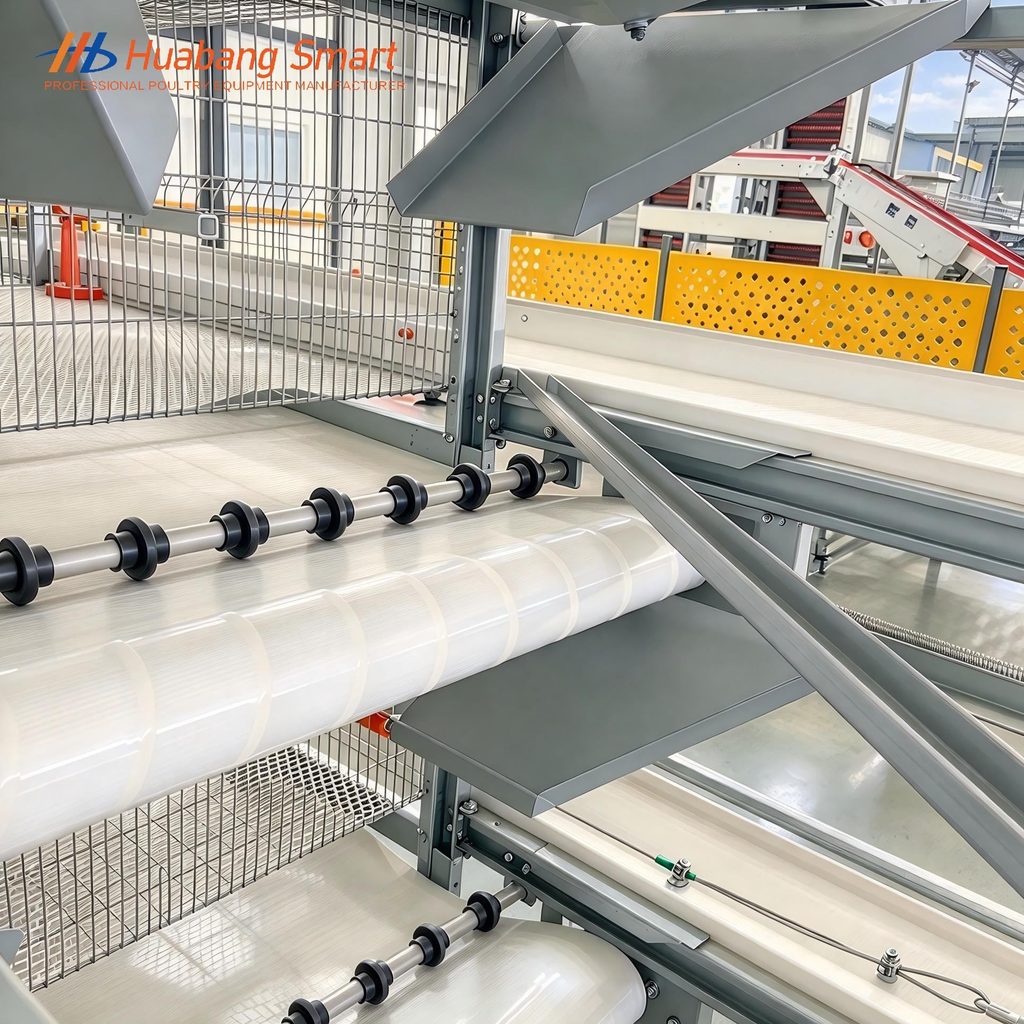
Manure Handling and Air Quality
Manure makes things smell, gets wet, and produces ammonia. The animal waste from cages falls through the mesh and lands on a PP belt that is cleaned every one to two days. Birds don’t touch their own waste, so they don’t get coccidia or other germs. Researchers have found that birds have trouble breathing and do worse when they are exposed to ammonia. Getting rid of it often is good for their health and growth. Also, it’s easier to clean and kill germs on smooth galvanized surfaces as well. Huabang Smart says that this clean design supports programs that don’t use medicines and cuts down on the need for them.
Climate Control and the Role of Your Team
It is the temperature, humidity, and airflow that are moved closer to the birds as their needs change. The middle of the Huabang Smart design is 5 cm higher than the rest of the design. This lets air flow and keeps things cool. Tunnel ventilation and evaporative cooling pads work well in hot and humid places. Packs of insulation are used in places that get cold in the winter. You still need to be in charge even when things are automated. Someone has to read the alarms, keep an eye on the birds, set the sensors right, and do something with the data. People who want to buy something should see technology as a way to make good managers more reliable, not as a way to get rid of them.
How Does a Fully Automatic Broiler Chicken Cage Improve Productivity and Capacity?
Vertical Space and a Simple Capacity Formula
There is more room for things when they are stacked vertically, but it doesn’t take up more floor space. Start with one unit: a cage’s area is 1.25 m², which is the same as 1.25 m x 1.0 m. To get the total cage area, multiply the number of units in each row and tier. Then, divide the available space by the amount of space each bird needs at its full market weight. It’s just a guess what the result will be. The stocking density should be shown on a plan drawing since it depends on the goal weight, the amount of airflow, the service lanes, and the local health and safety rules. Depending on the size of the house and the number of levels, Huabang Smart systems can handle groups of 1,000 to 50,000 birds or more.
Performance Indicators Worth Tracking
The amount of work someone does is shown by numbers. When you look at FCR, you can see how much feed was used per unit of weight gain. Huabang Smart says there was a 0.1 to 0.2 point improvement. When you make something, feed costs 60–70% of the cost, so even small gains in FCR are useful. Huabang Smart also says that controlling the weather perfectly can save up to 8% of the cost of feed every year. Watch how much they gain, how often they die, how long they work, how much water they drink, and how much energy they use. You should see all vendor numbers as goals. Finally, the numbers rely on how the house is set up, the feed quality, and how well it is run.
Fully Automatic Cage vs. Manual Cage vs. Floor-Raising
Each method works for a different farm. Fully Automatic Broiler Chicken Cages cost more at first, but they keep birds away from poop, save time, and take up less space. They do a good job for big companies that pay loads of money. People have to feed, water, and clean cages by hand every day, even though they cost less. For floor-raising, you need more room and trash, and birds like to hang out near droppings. Developers in the U.S. still do this all the time, so check the contract rules first. Choose based on the size of the farm, your budget, your plans to grow, and how well you think the animals will be cared for.
What Are the Financial Benefits, and How Should You Evaluate a Quotation?
Building a Simple ROI Estimate
Tech prices are important, but you should also look at how well the tech works over a number of production cycles. Feeding and drinking lines, cleaning the manure, ventilation, electrical work, shipping, setting up, and starting up the animals are all part of the initial costs. The costs of running a business include things like labor, energy, repairs, spare parts, cleaning, and downtime. To figure out your return on investment (ROI), you should look at how much you save by doing less work, throwing away less food and water, getting more birds per house, and getting more reliable results. Temperature, insulation, fan speed, and processor settings can all change how much energy is used, so use data from your area to make a model. Good to know that the building will last 20–25 years and the electronics will last 5–10 years.
What a Professional Quotation Should Show
There should be more than just the total price on a quote. You should ask about the size of the cage, how many levels it has, how many animals will be kept in it, how much space it will have, the food and water supplies, how the manure will be cleaned up, the ventilation and cooling system, the controls, how much electricity it will need, the warranty, and who will be responsible for setting it up and running. This system from Huabang Smart comes with a guarantee that lasts for one year. Also, find out what the price includes: just the tools, FOB, CIF, installed, or “turnkey.” Next, look at the total cost of landing, the size of the container, any fees or taxes, and how much it costs to get from the port to the farm. Prices aren’t always the same because of how the steel is treated, how much automation is used, how much customization is done, and how much work needs to be done. Line by line, look at the proposals to find the places where the prices are different.
Choosing a Supplier for a Large Farm
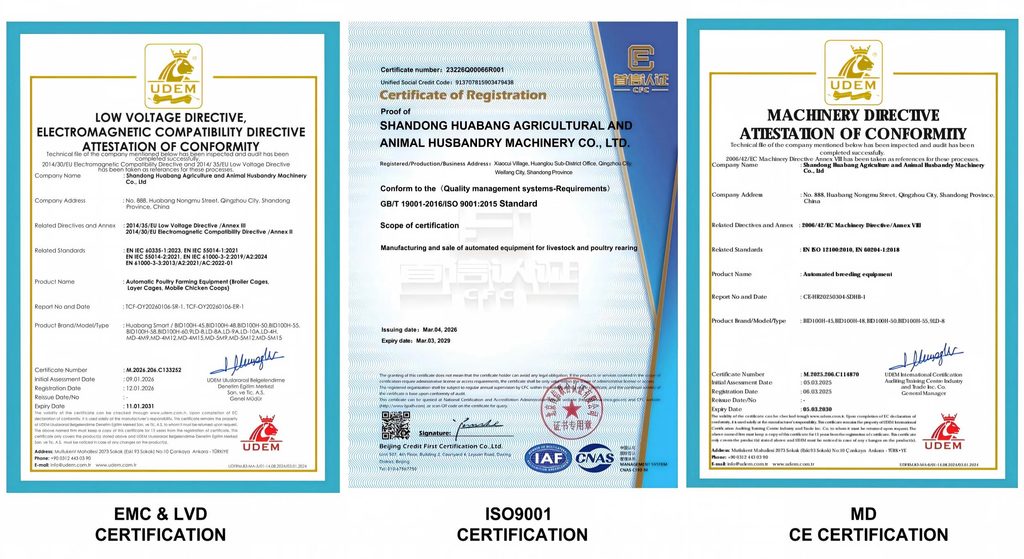
Before selecting a Fully Automatic Broiler Chicken Cage, buyers should first define their specific requirements, including the number of birds, poultry house dimensions, local climate, power standards, water supply, manure management preferences, and desired level of automation. Once these requirements are clear, compare suppliers based on material quality, corrosion resistance, structural strength, system compatibility, production capacity, export experience, installation support, and spare-parts availability. Huabang Smart has 17 years of experience in poultry equipment development and manufacturing. The company states that it holds ISO 9001 and CE certifications, owns 49 key technology patents, serves customers in more than 100 countries, and has a production lead time of 30 to 60 days. It also offers OEM and ODM services, allowing customers to develop customized Fully Automatic Broiler Chicken Cage solutions based on their own designs and requirements. To evaluate a supplier more thoroughly, buyers should also confirm whether the company operates as a direct manufacturer, system integrator, or turnkey project contractor. These details can help you determine whether its Fully Automatic Broiler Chicken Cage products and services match your farm’s actual needs and long-term development plans.
Installation, Maintenance, and Measuring Results
Installation and Commissioning
Performance is safe if the installation is done right. The first step is usually to check the page and mark the rows. After that, the frame is put together. Finally, the equipment for waste is set up, and the ventilation, control, and electricity systems are linked. The food and drinking lines are then put in place. The last steps are to test and train the operators. Parts that leak, shake, or break early are less likely to happen when the balance is right. Huabang Smart provides video installation tips, on-site installation, and chicken-raising tips. Get a written plan from the seller that tells your team what they need to do. How long it takes depends on how big the house is and how big the job is.
Maintenance Routine and Spare Parts
It takes more time to do easy things. Every day, make sure the belts, feeders, and drinks all work. Once a week, check the electronics, belts, bearings, augers, and sensors. The house should be cleaned and sanitized, and the sensors should be set every cycle. You should still check the welds and contact points even though the galvanized coating doesn’t rust in air with a lot of ammonia. Keep important extra parts on site, like belts, bearings, and drinkers. Before you sign, find out how long it takes for technical support to get back to you. Faster responses mean faster fixes.
Measuring Results and Looking Ahead
Do a test run before you install. Keep track of how many hours were worked, how much feed and water were used, how many animals died, how much they gained on average each day, the FCR, how much energy was used, how long it took to clean up the manure, how much downtime there was, and how much it cost to maintain. You can look at the differences between tests when you use the same methods over several runs. Gains can be slowed down by not enough airflow, too much stocking, bad training, bad feed, and maintenance that isn’t done on time. Soon, managers will be able to act faster thanks to remote alarms, planned maintenance, and benchmarking across multiple homes. It is already possible for Huabang Smart’s IoT options to let sensors send information to a central platform about weight, feed, and deaths. In this way, you can keep an eye on several sites from away.
Conclusion
A Fully Automatic Broiler Chicken Cage helps a farm work better by taking care of the chickens’ needs like food, water, and poop pick-up. This keeps people from having to work as hard and makes sure that every bird gets the same daily care. Adding vertical H-type steps to the same house makes it bigger. This number should be based on the size of the cage, the weight of the largest bird, the airflow, and the rules for the birds’ well-being. Automated systems cost more up front than putting people in cages and lifting floors, but they work well for big companies that pay a lot for workers. ROI is based on how much time and money are saved, how well feed and water are used, and how steady the results are over several rounds. This is why it’s important to get a detailed quote and a baseline measurement before the work is done. The results also depend on how well it was set up, how well it is kept up, and how well it lets air flow through it. Automation does not replace management; it just makes their jobs better.