

lecting the right Automatic Chicken Nesting Box directly impacts hatching egg cleanliness, breakage rate, flock welfare and your farm’s operating efficiency. Before purchasing, evaluate your breeder hen population, nesting design, material quality, egg collection workflow and after-sales support. Calculate the required nesting capacity based on your flock size and the manufacturer’s recommended birds per module. Verify the egg transfer path and whether the structure resists moisture and ammonia corrosion.
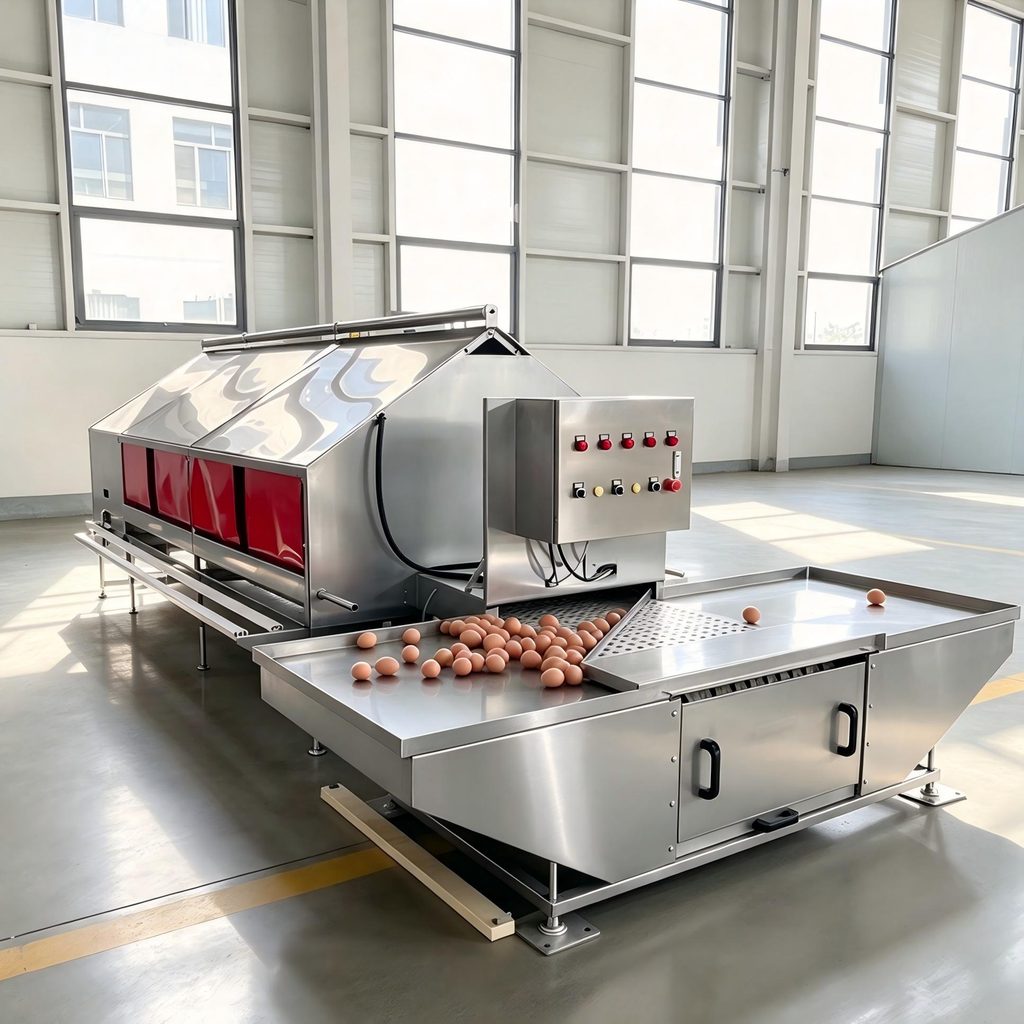
For breeder operations, protecting hatching eggs from cracks and contamination is far more critical than for small backyard flocks. A well-matched automatic nesting system can integrate smoothly with your existing egg conveyor lines without costly reconstruction, keeping eggs clean and lowering manual workload.
This guide is written for breeder farm owners, poultry engineers, distributors and OEM buyers. It covers nesting box design, dimension planning, housing layout, material selection, automation features, supplier evaluation and total cost analysis. It also explains how Huabang Smart’s automatic chicken nesting system fits into your project for side-by-side comparison.
Step 1: Define Farm Requirements & Compare Nesting Box Designs
Calculate Nesting Capacity Based on Breeder Flock Size
Start capacity planning with your total breeder hen count and the rated capacity per nesting module. For example, a flock of 12,000 hens with a 120-bird module requires at least 100 sets. Always cross-reference with breed management guides and local animal welfare regulations, as bird weight and laying behavior affect occupancy.
Breeder hens lay mostly within a short morning window. Overcrowded nests lead to floor eggs, dirty shells and higher breakage; oversized systems waste capital. Reserve extra capacity only if you have confirmed expansion plans.
Match Egg Collection Method to Your Labor Strategy
Three common collection options are available: manual collection, roll‑away nests and fully automatic egg collection lines.
- Manual collection has low upfront cost but needs frequent aisle patrols, raising risks of egg cracking and biosecurity exposure.
- Roll‑away nesting boxes guide eggs onto a conveyor automatically to cut labor.
- An Automatic Chicken Nesting Box with full automation centralizes egg transport, reduces foot traffic inside the house and improves biosecurity control.
Choose automation level according to labor stability, number of poultry houses and long‑term staffing plans.
Compare Tiers, Individual & Colony Nest Designs
Single‑tier nests are simpler to access and maintain. Tiered nesting systems save floor space but demand stronger building structures and planned service access. You also choose between individual nests and colony‑style designs; smaller group compartments are easier to monitor and manage for breeders.
Traditional static nests require frequent manual pickup. Roll‑away designs remove eggs quickly once laid, maintaining shell cleanliness and minimizing damage.

Step 2: Select Dimensions, Layout, Materials & Hygiene Features
Module Size & Quantity
Nest size depends on breeder breed, body weight, entrance design and collection method. Hens naturally seek dark, safe nesting spaces, so comfort directly determines nest usage rate. Calculate module quantity by flock scale, then adjust for laying peak, collection frequency and future expansion. Modular nesting systems allow incremental installation to match your farm growth.
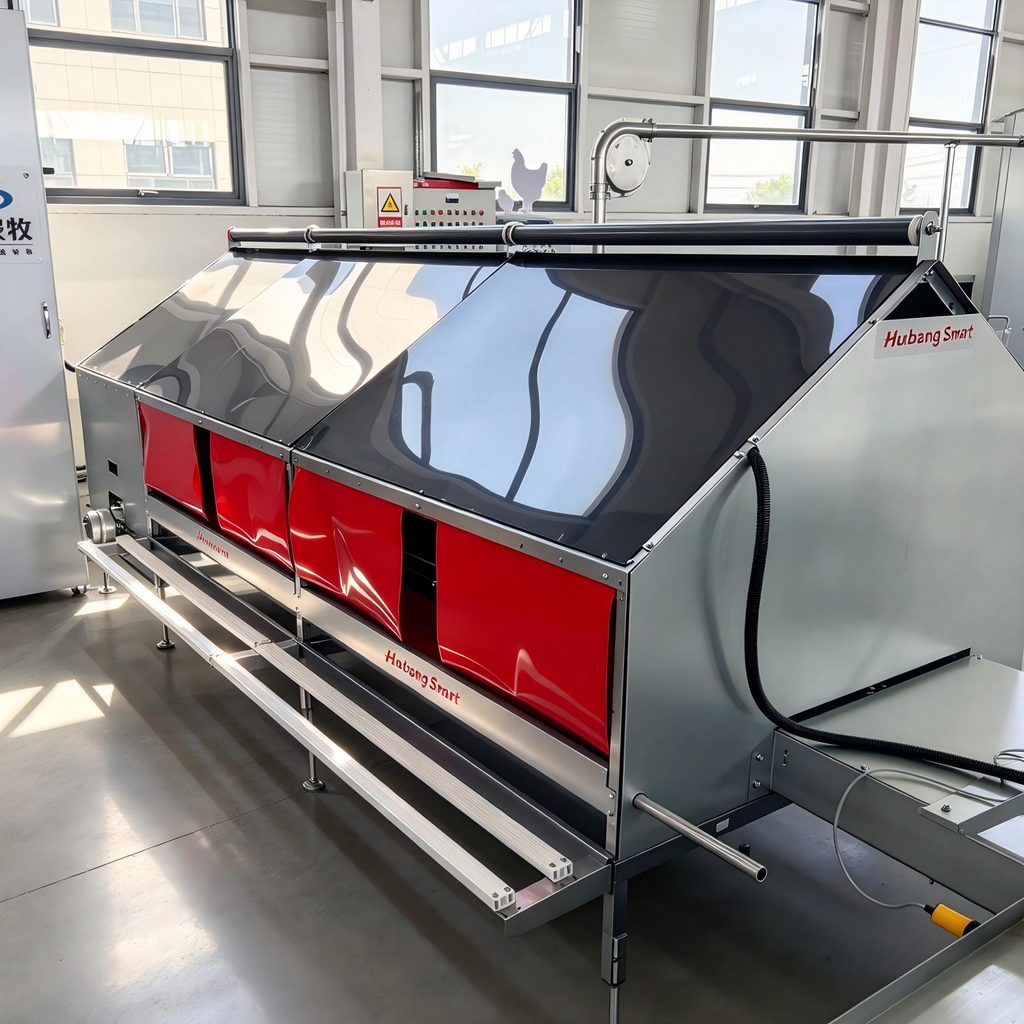
Huabang Smart’s standard module measures 1.2 m × 1.4 m, or 1.88 m including the perch, with a rated capacity of around 120 breeder hens per set.
Poultry House Layout & Climate
Draw your house layout before ordering, marking feeder positions, bird walking routes, aisle width, conveyor paths and maintenance zones. Technicians must reach motors and belts easily without dismantling surrounding equipment.
Temperature, drafts, light and airflow all influence where hens choose to lay eggs. Poor ventilation creates damp micro‑zones around nests. Our nesting unit features a 5 cm raised central structure to boost cross ventilation, reduce summer heat stress and prevent standing moisture. Sharing a simple top layout sketch with your supplier speeds up custom drawing delivery.
Material & Hygiene Performance Check
Vinyl is lightweight and easy to clean but vulnerable to UV radiation and certain disinfectants. Ordinary galvanized steel may corrode under high ammonia and humidity. Hybrid constructions combine multiple materials, but all surfaces should be smooth, non‑porous, gap‑minimized, with rounded safe edges and anti‑rust fasteners.
Huabang Smart uses zinc‑aluminum‑magnesium plate for the nest body. It delivers far better corrosion resistance than regular steel sheets in the humid, corrosive breeder house environment. Roll‑away egg channels separate eggs from manure, litter and feathers. Routine inspection should check for dirty pads, jammed eggs and belt drift, while weekly maintenance covers fasteners and drive assemblies. Full deep cleaning is recommended between flocks.
Step 3: How an Automatic Chicken Nesting Box Works & Farm Matching
Working Principle of the Automatic Chicken Nesting Box
A breeder hen enters the Automatic Chicken Nesting Box to lay. The egg rolls slowly through a buffered section onto the egg belt and moves toward the central collection line. Huabang Smart’s integrated system combines egg conveying, collection and temporary storage for streamlined egg handling.
A 0.4 kW front motor and a 0.75 kW rear motor support stable operation on long conveyor runs. The belt features automatic tension adjustment to avoid side slippage and guarantee consistent egg movement. Its open‑frame design lets loose feathers and dry debris fall away, keeping hatching eggs clean during transport.
Benefits & Limitations of Automation
An Automatic Chicken Nesting Box delivers the highest return for large‑scale breeder farms, multi‑house operations, sites with labor shortages and projects requiring consistent, frequent egg collection. It saves labor without disrupting egg handling workflows.
The tradeoff is higher initial investment. Automatic nests require a suitable building layout, stable power supply, scheduled maintenance and trained operators. After‑sales service and spare part availability are equally important as the equipment itself. Confirm power requirements, maintenance responsibility and spare part support before committing.
Match the Nesting System to Your Farm Profile
Small and medium breeder farms benefit from compact modular systems that are simple to install, clean and expand. Large commercial operations need continuous modular nest lines with durable roll‑away structures and convenient service access. Farms facing labor shortages should prioritize an Automatic Chicken Nesting Box plus fast technical support.
For distributors and OEM clients, flexible customization on layout, dimensions, branding, export packaging and technical documentation is essential. Huabang Smart’s nesting units can be added or removed freely to fit your house length, and we accept custom OEM / ODM orders based on your drawings.
Step 4: Supplier Evaluation, Total Ownership Cost & Common Pitfalls
Build Your Supplier Assessment Checklist
Do not judge by appearance or unit price alone. Verify manufacturing history, coating quality, consistent production standards and inspection records. Confirm ISO9001 and CE certifications are valid for breeder farm applications.
A reliable supplier can customize dimensions, capacity, packaging and conveyor interfaces, supply layout drawings and offer installation guidance. Clarify lead time, freight terms, warranty coverage, spare part stock, remote troubleshooting and response speed before bulk orders. Key questions to ask: confirmed lead time, warranty scope, installation responsibility and standard spare parts inventory.
Calculate Total Cost & Track Operational KPIs
The unit price is only one component of the expense. Include shipping, import duty, civil works, electrical wiring, conveyors, labor, cleaning, spare parts, downtime and repair costs, then amortize over the system’s service life.
After commissioning, track floor egg rate, dirty egg percentage, breakage rate, collection labor hours, nest occupancy and downtime. Under standard operation, Huabang Smart’s automatic chicken nesting system keeps egg breakage below 0.3%, supporting your performance benchmarking. Use a weighted scoring matrix to compare suppliers across service life value, hygiene performance, size, durability, automation, customization, support and delivery.
Avoid Frequent Purchasing Mistakes
The most common error is choosing based only on low upfront price, which later results in higher cleaning, repair and downtime costs. Buyers also miscalculate peak laying capacity, ignore existing house layout conflicts with aisles, feeders, ventilation or conveyors, and underestimate long‑term corrosion from manure, disinfectants and high humidity.
Others invest in an Automatic Chicken Nesting Box without securing stable power, spare parts or trained maintenance staff. As stated in the USDA Egg‑Grading Manual, dirty or cracked shells fail quality grading standards, and these oversights directly hurt farm profitability.
Huabang Smart Automatic Chicken Nesting Box: Product Overview
Quick Specifications
- Module dimension: 1.2 m L × 1.4 m W; 1.88 m including perch, 2 m height with perch
- Weight: 40 kg
- Rated capacity: approx. 120 breeder hens per set
- Frame: 3 mm hot‑dip galvanized steel
- Motors: 0.4 kW (front), 0.75 kW (rear)
- Warranty: 1‑year global warranty
- Compatibility: connects to most existing automatic egg collection lines, suitable for floor breeder houses, multi‑level systems and mixed breeding setups without full reconstruction.
Core Competitive Advantages
- Buffered egg roller system: Slow, smooth transfer prevents eggs from slipping off the belt and reduces breakage.
- Night lifting mechanism: Lifts the nest body after dark so hens do not roost inside overnight, cutting dirty eggs drastically the next morning.
- Self‑tensioning egg belt: Minimizes regular recalibration and jam clearing work.
- Built‑in universal interface: Works with most standard automatic egg lines without extra adapters.
- Automatic collection: Cuts labor demand and stabilizes egg quality.
Customization, Production & Global Support
We adjust nesting quantity and motor configuration for longer house runs according to your layout. Standard production lead time is 30–60 days. With 17 years of poultry equipment design and manufacturing experience, our factory holds ISO9001 and CE certification and delivers direct factory shipments. OEM / ODM orders with custom drawings are welcome.
Our technical team provides commissioning guidance, including belt tension adjustment, lifting mechanism setup and motor wiring training. Headquartered in Qingzhou, Shandong, we serve clients across more than 100 countries and own 49 core technology patents.
Conclusion
When purchasing an Automatic Chicken Nesting Box for breeder flock management, prioritize a solution matching your farm’s unique conditions. Calculate capacity based on hen quantity and manufacturer recommendations, then select an egg collection workflow fitting your labor resources and housing layout.
Choose durable, corrosion‑resistant, smooth‑surface nesting materials for easy cleaning. An automatic roll‑away nesting box simplifies egg handling, lowers breakage and improves hygiene, yet it requires stable power, trained operators and accessible spare parts.
When comparing suppliers, review certifications, customization options, delivery schedule and warranty terms. Always evaluate total cost of ownership instead of the single unit price, and track egg quality KPIs after installation. Ignoring layout constraints or underestimating capacity will damage egg quality and hurt long‑term farm profitability.
If you need custom layout drawings, datasheets or formal quotations for your automatic chicken nesting box project, contact Huabang Smart.